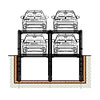
Mechanical and automated parking systems replace the inefficient and costly traditional parking layouts with engineered movement, intelligent control systems, and structured vehicle storage. Rather than dedicating large areas to ramps, aisles, and turning circles, SmarTEC systems use vertical and horizontal movements to store vehicles safely and efficiently within a compact footprint, allowing space and costs so saved to increase sellable floor areas, save on construction time and improve overall development outcome, making projects with marginal returns profitable.
Step 1 — Vehicle Entry
Drivers enter clearly designated transfer area or exchange spaces. Visual guidance, lighting, and sensors assist with accurate positioning, ensuring the vehicle is correctly aligned before the system begins operation.
Step 2 — System Identification & Safety Checks
Once the vehicle is positioned, the system performs automated safety checks. Sensors confirm vehicle dimensions, weight limits, and positioning. Doors or barriers secure the transfer area before any mechanical movement begins, ensuring safe separation between users and machinery.
Step 3 — Automated Movement
Depending on the system configuration, the vehicle is lifted, shifted, rotated, or transferred using lifts, pallets, shuttles, or stacker platforms. These movements are coordinated through precision software designed to optimise efficiency while maintaining strict safety protocols.
Step 4 — Secure Storage
Vehicles are stored in allocated positions within the system structure. Because drivers do not access storage zones, risks associated with vehicle movement, collisions, or unauthorised access are significantly reduced. This controlled environment also improves security and reduces wear typically associated with conventional parking areas.
Step 5 — Retrieval Process
When the user requests retrieval, the system automatically locates and transports the vehicle back to the transfer area. Turntables or directional alignment features ensure the vehicle is presented in a convenient exit position where required.
Step 1 — Vehicle Entry
Drivers enter clearly designated transfer area or exchange spaces. Visual guidance, lighting, and sensors assist with accurate positioning, ensuring the vehicle is correctly aligned before the system begins operation.
Step 2 — System Identification & Safety Checks
Once the vehicle is positioned, the system performs automated safety checks. Sensors confirm vehicle dimensions, weight limits, and positioning. Doors or barriers secure the transfer area before any mechanical movement begins, ensuring safe separation between users and machinery.
Step 3 — Automated Movement
Depending on the system configuration, the vehicle is lifted, shifted, rotated, or transferred using lifts, pallets, shuttles, or stacker platforms. These movements are coordinated through precision software designed to optimise efficiency while maintaining strict safety protocols.
Step 4 — Secure Storage
Vehicles are stored in allocated positions within the system structure. Because drivers do not access storage zones, risks associated with vehicle movement, collisions, or unauthorised access are significantly reduced. This controlled environment also improves security and reduces wear typically associated with conventional parking areas.
Step 5 — Retrieval Process
When the user requests retrieval, the system automatically locates and transports the vehicle back to the transfer area. Turntables or directional alignment features ensure the vehicle is presented in a convenient exit position where required.